How it works
A job search gets better when it's legible: which source found the role, which CV went out, where the process stopped. JobLedger keeps that record, so the next hundred applications produce a diagnosis.
One record, three stages, a human promotion at every boundary. Agents propose candidates; every promotion, and every application, is yours to make.
Open the app, see what needs you
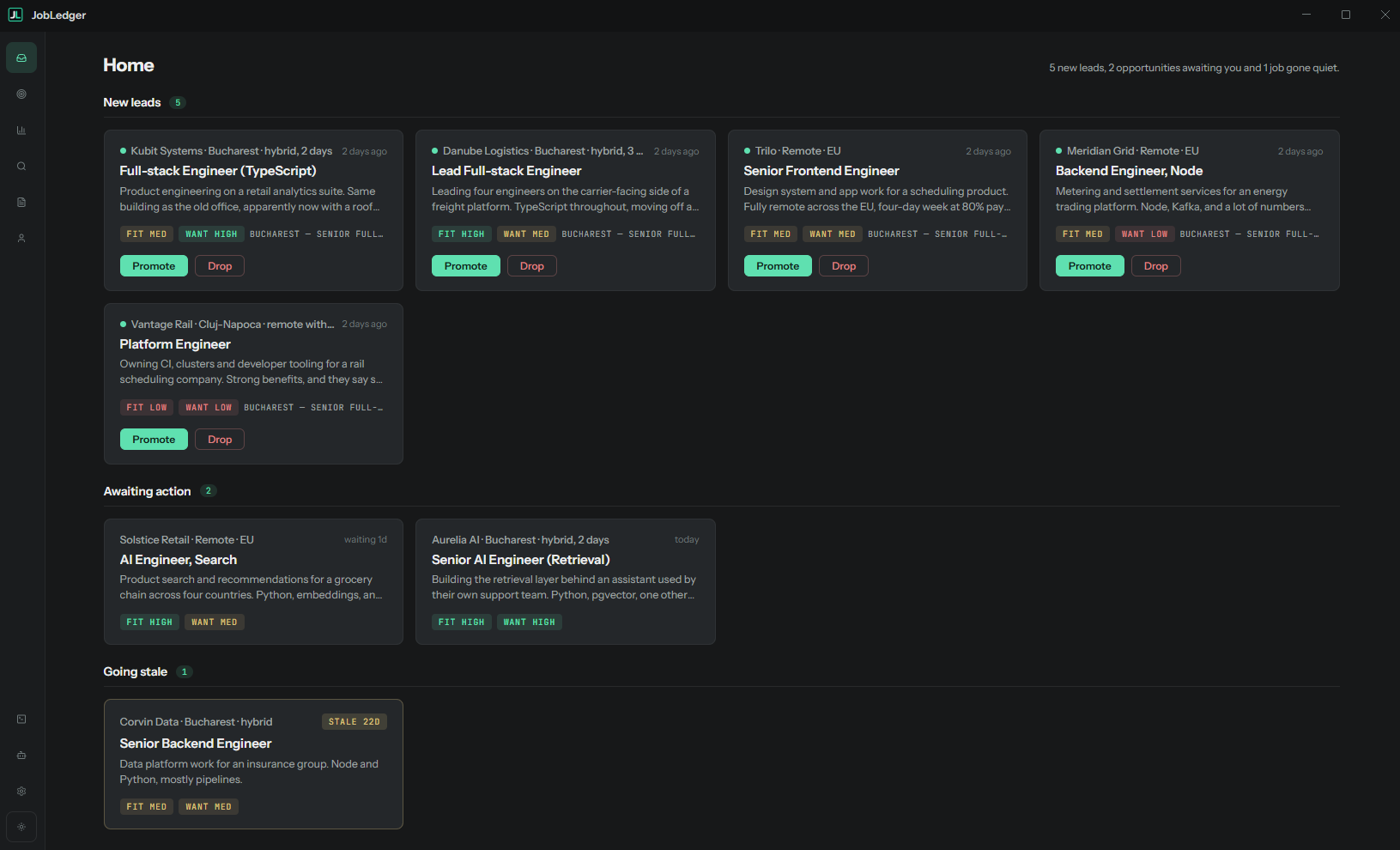
Home is an inbox: new leads you haven't looked at, opportunities awaiting a decision, and applications gone quiet. Each card jumps straight to its record, and a lead stays new until you actually open it.
Where processes die
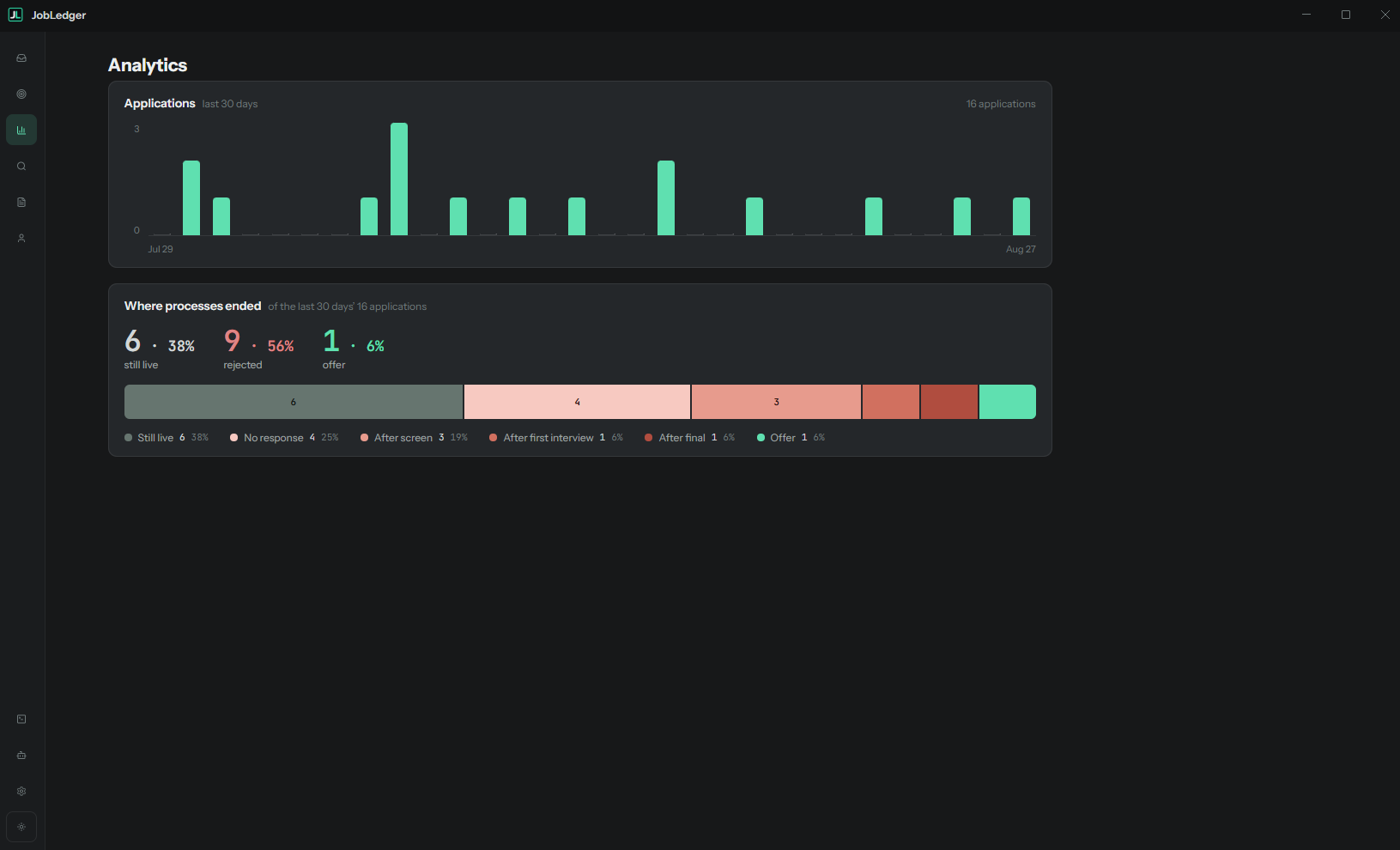
A rejection requires a stage: no response · after screen · after first interview · after final. A screen failure means the CV is the problem; a post-contact failure means the interview story is. One dropdown, answered permanently. Quiet applications get flagged as stale after a threshold you set, straight onto Home, so "they never answered" becomes a recorded outcome too.
Searches run themselves
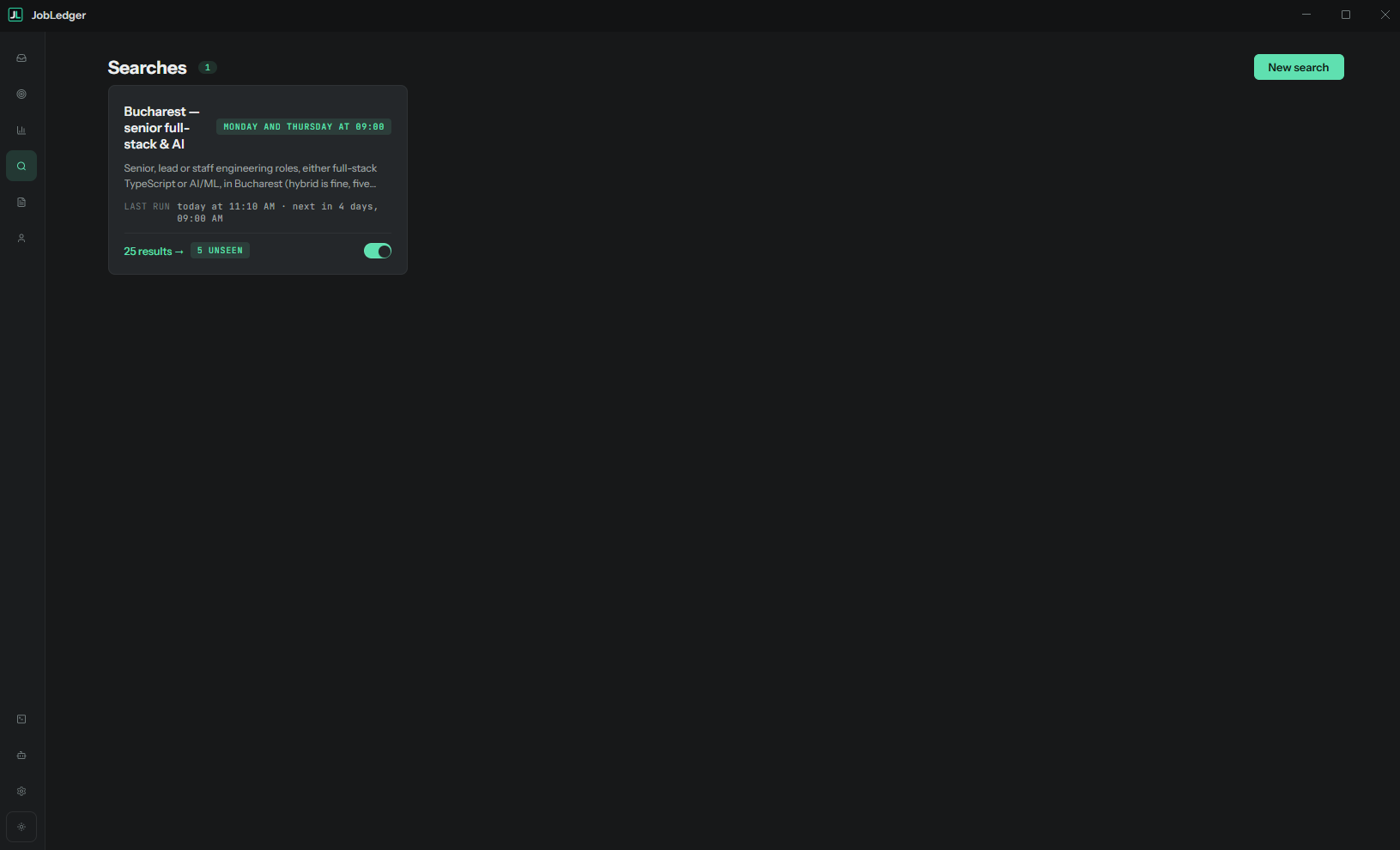
Describe what you're looking for and where to look in plain text, then run it manually or on a schedule. A run the app missed while closed queues up and fires on next launch. Each run lands structured candidates: company, title, location, comp, posted date, a one-paragraph summary, and a URL the agent actually fetched. Deduplication remembers everything you've already seen, at every stage, so each run brings only what's new.
Fit and Want, kept apart
Two independent Low / Medium / High scores, proposed at search time and always yours to edit. Fit: can you plausibly do this job. Want: do you actually want it. High-fit/low-want and low-fit/high-want are both real, and both worth seeing before you spend an evening on an application. Each score carries a one-line justification, and the justification is what you argue with.
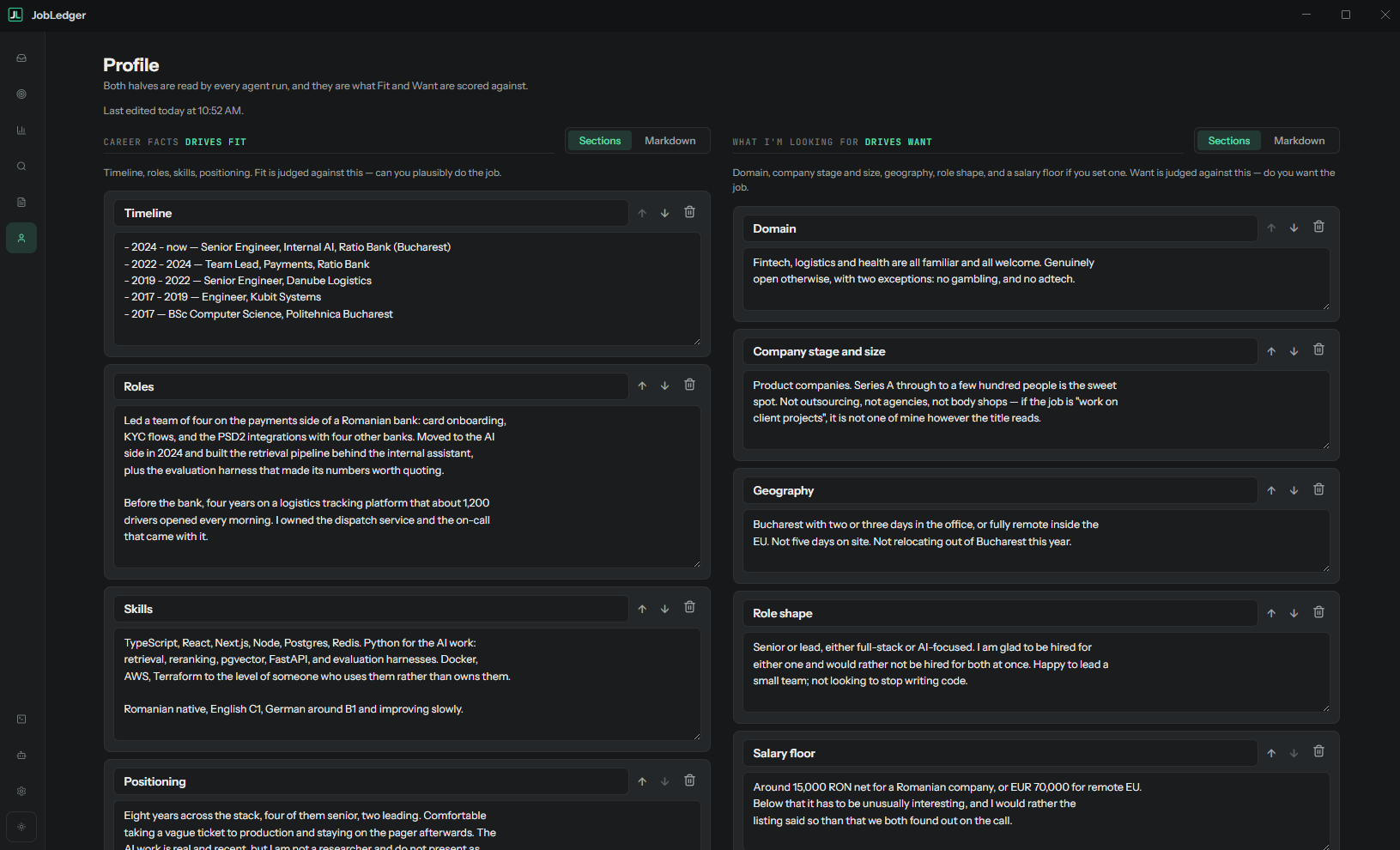
Briefed once, read by every run
Career facts on one side, what you're looking for on the other. Every agent reads both, so each run arrives already briefed. Fit is judged against the first half, Want against the second. The screen tells you plainly when a half still needs filling in, so you always know what a score was judged against.
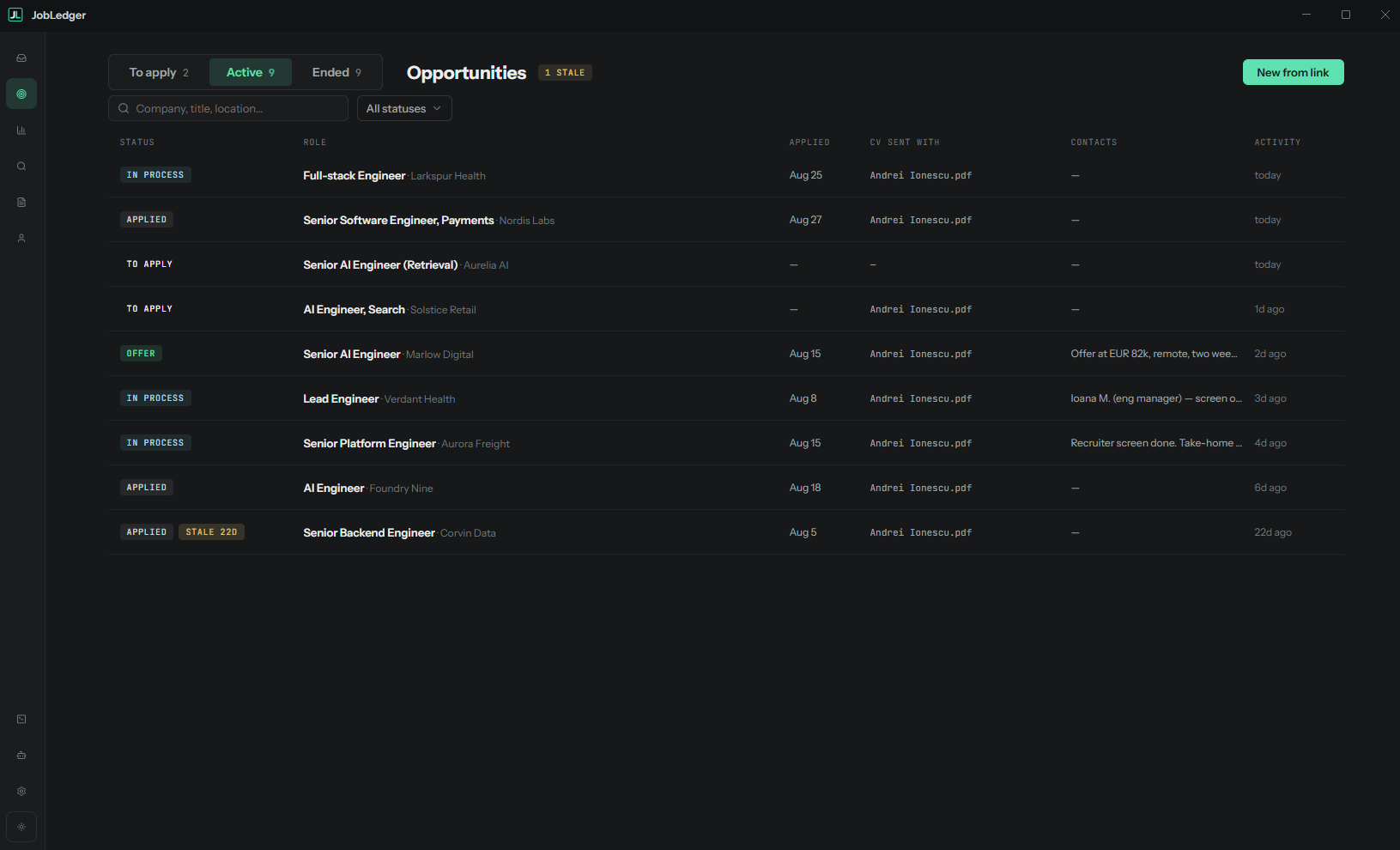
Every application in one place
Promoted roles wait under To apply with their scores and the recommended CV a click away. Applied ones move to Active, carrying status, contacts and a staleness flag. Ended ones keep their whole story. Three tabs hold the entire hunt, and a tip from a friend or a LinkedIn find joins it directly via New from link.
CVs as first-class objects
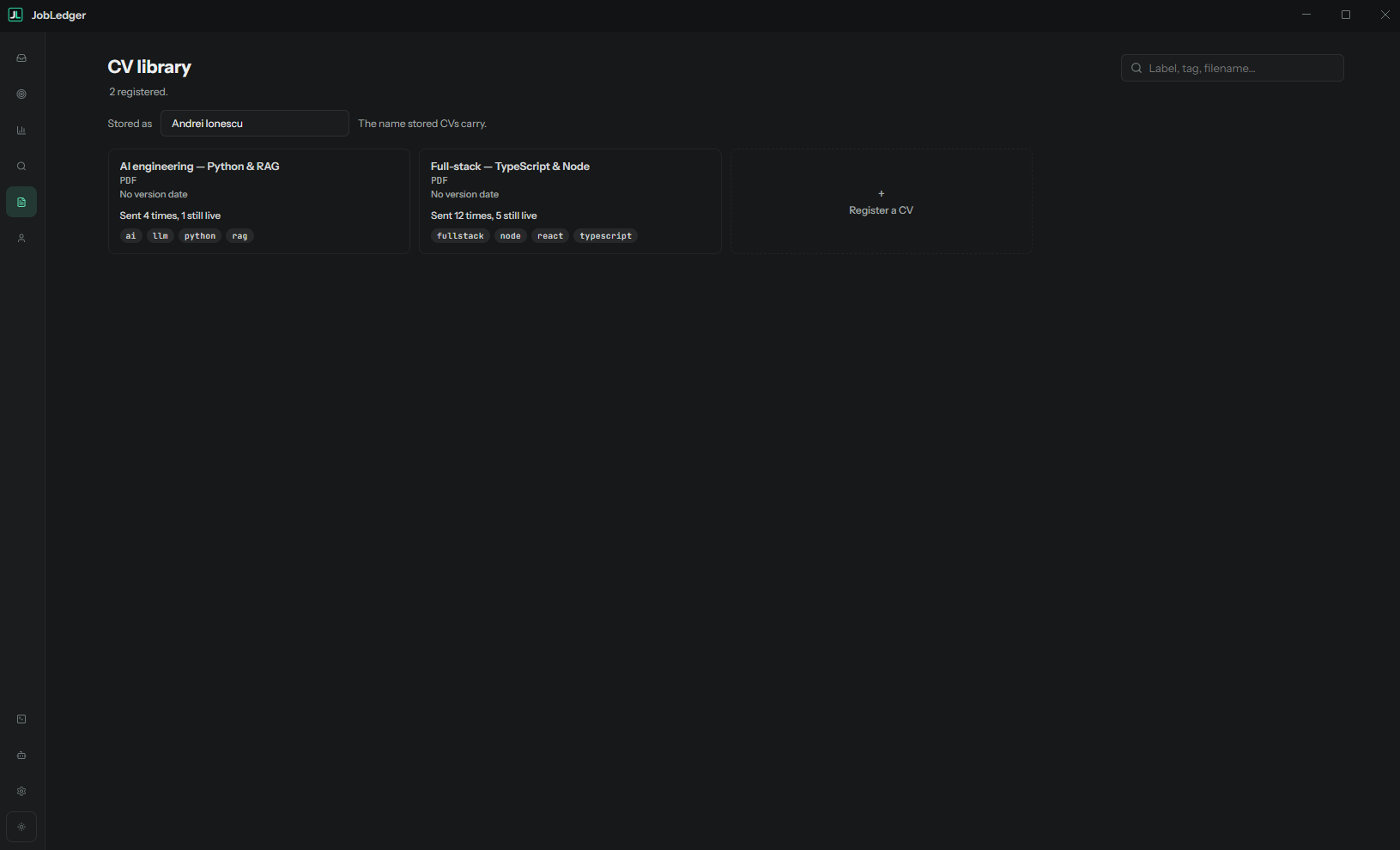
Register the CV files you already have, with a label, tags, and where each lives on disk. An agent recommends which one fits each opportunity, and the pick is recorded, so "which CV framing got through" becomes a question with an answer. Tailored generation comes later, once the record shows which framing works.